Navigating Europe's Water Challenges: Turning Scientific Knowledge into Water Resilience
Water is increasingly becoming one of Europe's defining strategic resources.
Across the continent, longer droughts, more frequent floods, declining groundwater reserves, biodiversity loss and growing competition between agriculture, industry, ecosystems and urban areas are transforming how water must be managed. These challenges rarely occur in isolation—they reinforce one another and often extend across national borders.
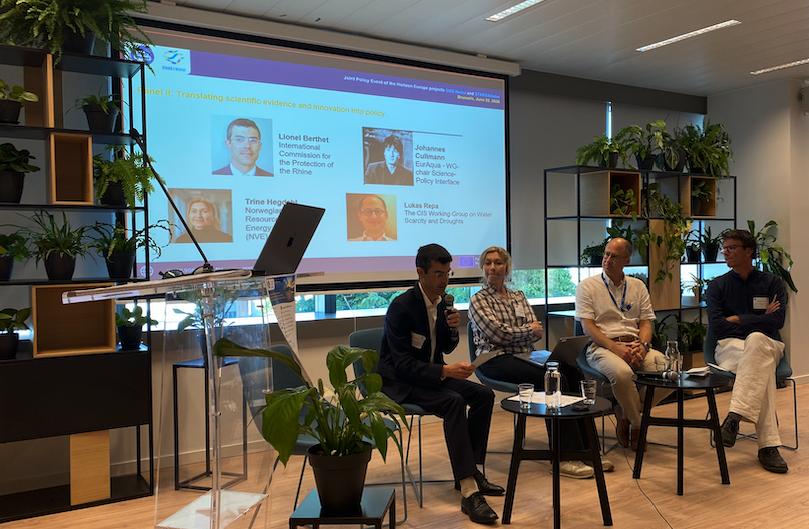
Against this backdrop, the Horizon Europe projects SOS-Water and STARS4Water jointly organised the policy event Navigating Europe's Water Challenges: BuildingResilience through Science and Policy, bringing together representatives from the European Commission, river basin organisations, national authorities, research institutes and water practitioners to discuss one central question:
How can scientific research better support the implementation of Europe's Water ResilienceStrategy?
A New Chapter for European Water Policy
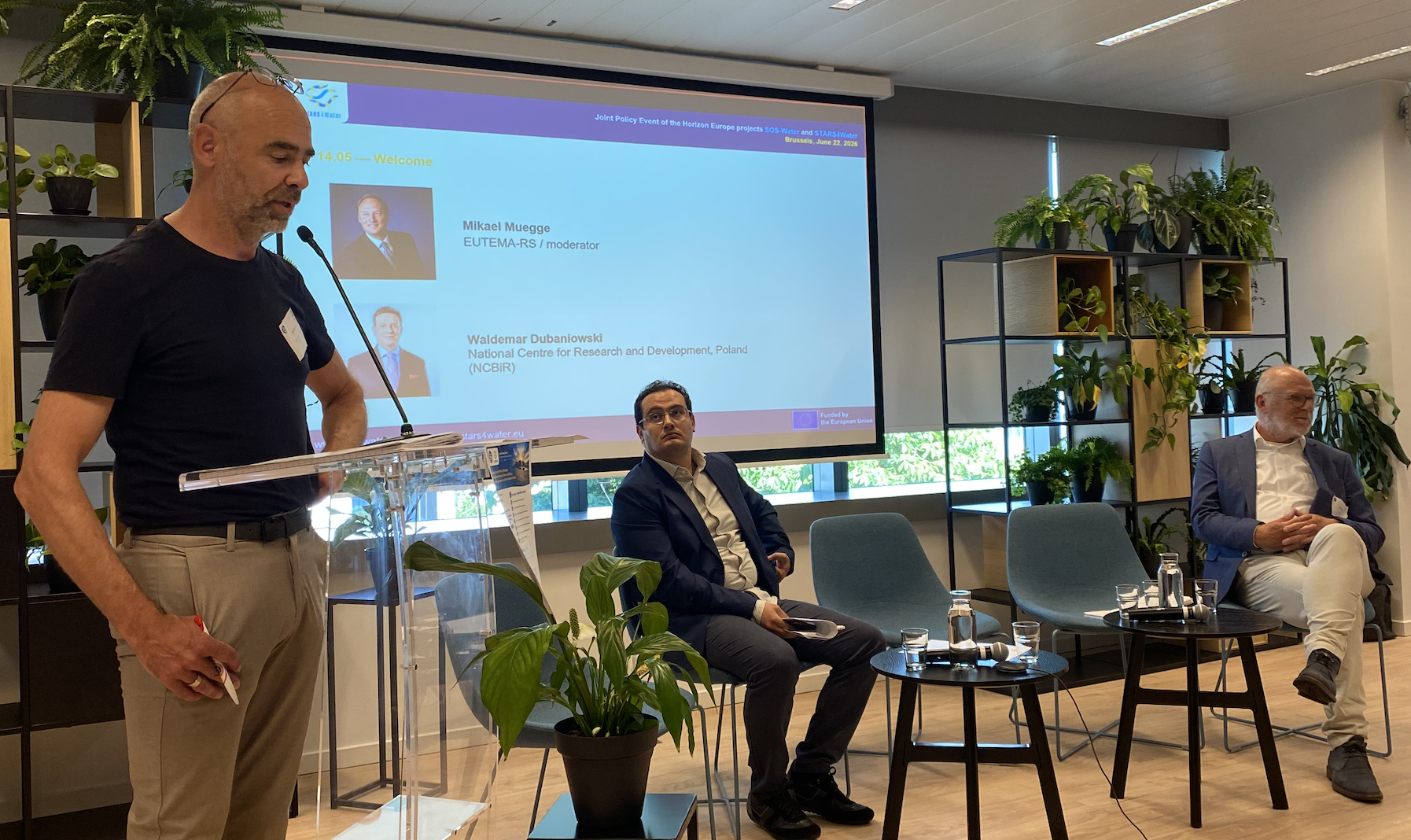
Opening the event, Joachim Maes, Team Leader for Sustainable Freshwater Management at the EuropeanCommission's DG Environment, described why Europe's approach to water management is evolving.
While the WaterFramework Directive has significantly improved water quality over the past two decades, Europe is now facing an equally pressing challenge: ensuring there is enough water to meet growing demands while protecting ecosystems.
"Water quality remains fundamental," he explained, "but water quantity has become equally critical."
The recently launched EuropeanWater Resilience Strategy reflects this shift. Rather than replacing existing legislation, it complements it by placing greater emphasis on restoring the natural water cycle, improving water efficiency, strengthening drought preparedness and making better use of innovation, digitalisation and scientific knowledge.
For the researchers behind SOS-Water and STARS4Water, this policy direction aligns closely with the work they have been developing over the past four years.
From Global Concepts to River Basin Decisions
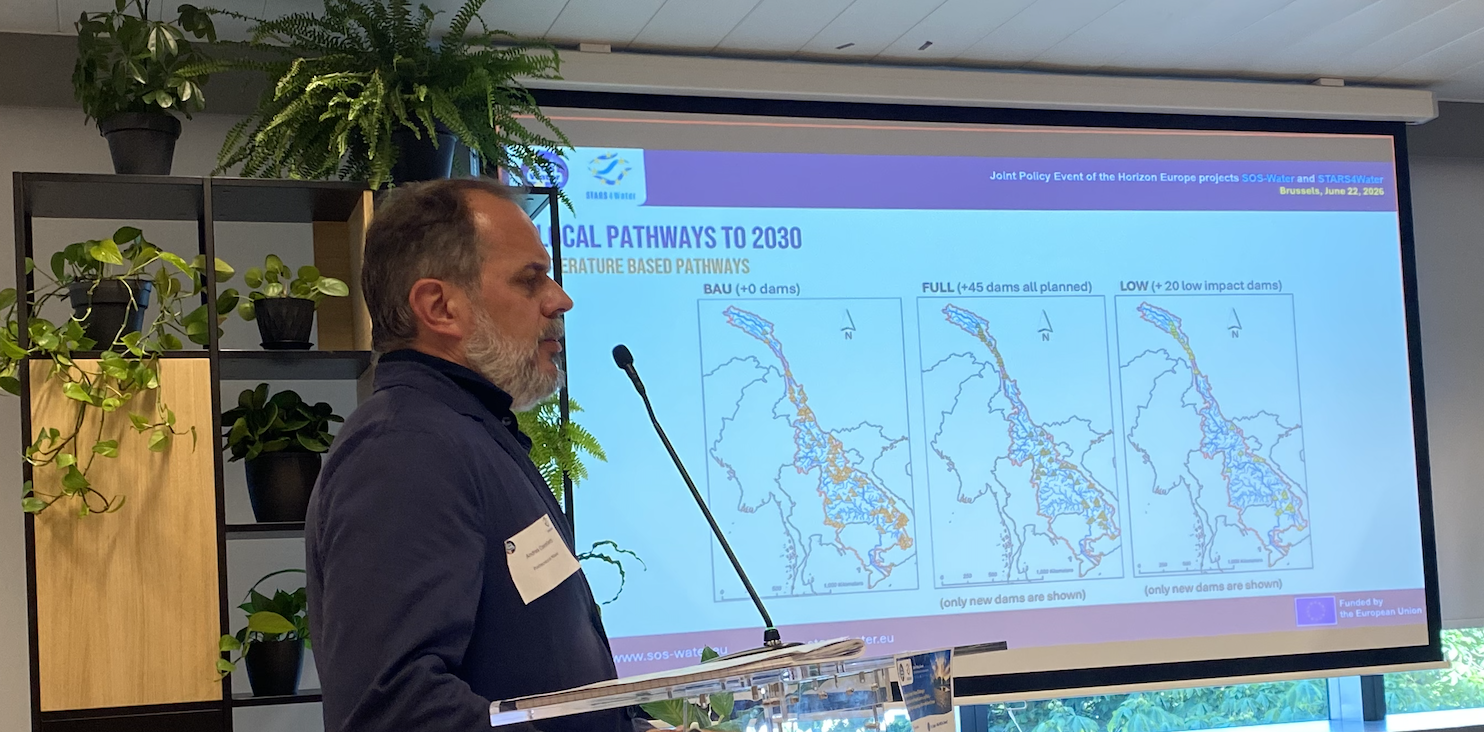
One of the scientific highlights came from SOS-Water, which has been investigating how the concept of a Safe Operating Space for Water can be translated into practical decision-making at river basin level.
Professor Andrea Castelletti explained that while global concepts such as planetary boundaries provide an important vision, water management ultimately happens locally.
Every river basin has different pressures, different ecosystems and different societal needs. Rather than applying a single universal threshold, the project has developed allow stakeholders to define locally meaningful sustainability limits while still contributing to broader global objectives.
Examples from theMekong and Júcar river basins illustrated how advanced modelling can help understand trade-offs between hydropower, agriculture, biodiversity, groundwater, ecosystem health and climate adaptation—all while explicitly accounting for uncertainty.
As Castelletti noted throughout the discussion, the goal is not simply to produce better models, but to create decision-support frameworks that help policymakers navigate increasingly complex choices.
Building Solutions Together with River Basins
Where SOS-Water focused on advancing scientific concepts, STARS4Water demonstrated how these concepts can be embedded in everyday water management.
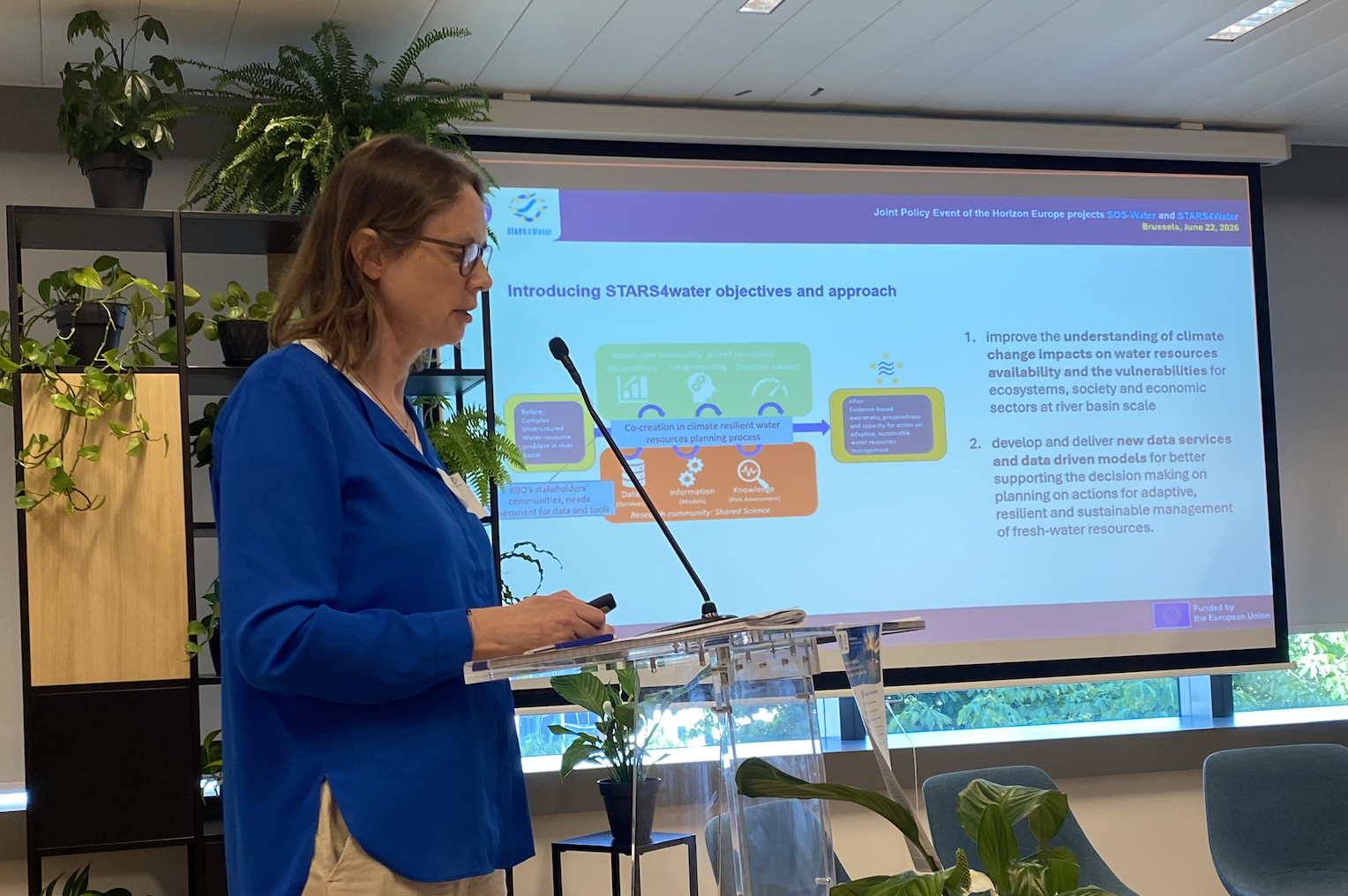
Presenting the project, Judith Maat emphasised that resilience cannot be designed from behind a computer screen.
Instead, the project began by asking river basin organisations themselves what information they actually needed.
Across seven European river basins—including the Danube, Rhine, Drammen, Duero, East Anglia, Crete and the Seine—stakeholders helped identify the gaps in existing decision-support systems before researchers developed new tools to address them.
The result is a suite of practical resources ranging from enhanced modelling frameworks and EarthObservation data integration to interactive dashboards, future climate scenarios, data portals and training materials that river basin organisations can continue using after the project concludes.
The message was simple:
Good science becomes valuable when it is developed together with those who will ultimately use it.
Science Is Not the Bottleneck
The afternoon's panel discussions perhaps produced the event's strongest message.
Birgit Vogel from the International Commission for the Protection of the DanubeRiver (ICPDR) and Lionel Berthet from the InternationalCommission for the Protection of the Rhine (ICPR) agreed that Europe is not suffering from a shortage of scientific knowledge.
"The interconnection between science and the people who have to make decisions is still very weak. Many excellent research results never reach the politicians and water managers who need them most" said Klaas Groen (International Commission for the Hydrology of the Rhine Basin).
Instead, the challenge lies in transforming research outputs into practical guidance for decision-makers.
River basin organisations frequently collaborate with Horizon Europe projects and highly value these partnerships. Yet they also described the reality of limited staff capacity, overlapping project requests and the difficulty of maintaining sophisticated tools once project funding ends.
As one panellist observed, the issue is no longer producing more science—it is ensuring that scientific knowledge reaches "the right people, at the right time, in a form that enables informed decision-making."
Participants repeatedly stressed that successful implementation depends on translating scientific findings into accessible language, practical guidance and operational tools that can support day-to-day river basin management.
Looking Beyond Individual Projects
Another recurring theme throughout the discussions was continuity.
Horizon Europe projects generate impressive scientific advances, but many participants questioned what happens once projects end.
Several speakers called for stronger coordination between projects, longer-term maintenance of digital platforms and decision-support tools, and more sustained collaboration between researchers and practitioners.
Former UN-WaterVice-Chair and EurAqua Working Group Chair Johannes Cullmann argued thatEurope should think beyond individual projects and instead build enduring scientific communities capable of supporting long-term implementation.
Innovation, he suggested, does not emerge simply because funding is available—it grows through trusted networks that allow researchers, authorities and practitioners to work together over many years.
Others echoed this view, emphasising that future success depends on creating stable partnerships rather than isolated research initiatives.
Water Resilience Is Ultimately Local
"Water is a very local and regional issue. We shouldn't expect one European directive to solve every water problem " stated Lukas Repa (European Commission)
Despite discussing European strategies throughout the day, participants consistently returned to one important principle:
Water resilience is built locally.
Whether addressing groundwater depletion in Mediterranean basins, changing snow regimes inScandinavia, flood risks in Central Europe or transboundary governance in major international river basins, every region faces its own combination of challenges.
European strategies provide a common direction.
Scientific research provides evidence.
But implementation depends on local knowledge, stakeholder engagement and governance that reflects the realities of each river basin.
"Research and policy support should not be too uniform. It must allow for the diversity of governance systems, hydrological conditions, risk profiles and sectoral trade-offs across Europe" stated Trine Hegdahl (Norwegian Water Resources and Energy Directorate)
Looking Ahead
The Brussels event marked more than the conclusion of two Horizon Europe projects.
It demonstrated the growing maturity of Europe's water research community and highlighted how collaborative science can directly contribute to policy implementation.
The discussions will now feed into a joint SOS-Water and STARS4Water policy brief, capturing the recommendations developed throughout the event and supporting implementation of the European Water Resilience Strategy.
As both projects approach their final months, their legacy will not only be the models, datasets and tools they have produced.
It will also be the partnerships they have strengthened between scientists, policymakers and river basin organisations - partnerships that will remain essential as Europe works towards a more resilient water future.
As Johannes Cullmann noted during the discussion, "Innovation doesn't happen simply because funding is available. It grows through trusted communities that work together over time."